
We're here to help, 24/7.
Connect with our expert travel consultants to plan your next trip.
Daedalus Reef
8 days / 7 nights · Port Ghalib Marina → Port Ghalib Marina · Advanced
● DEEP SOUTH · PORT GHALIB · ADVANCED
Daedalus Reef
Egypt’s most remote dive site. Daedalus sits 52 nautical miles from the nearest shore, rising from 500m depths. Three days on the reef — hammerheads, silvertips, oceanic whitetips and pristine coral walls that barely see another diver. Plus Elphinstone and Sataya Dolphin House on the way.
7 NIGHTS
BOTH ENDS · MARINA
TOTAL OVER THE WEEK
MINIMUM CERTIFICATION
ROUTE OVERVIEW
The Most Remote Reef in Egyptian Waters.
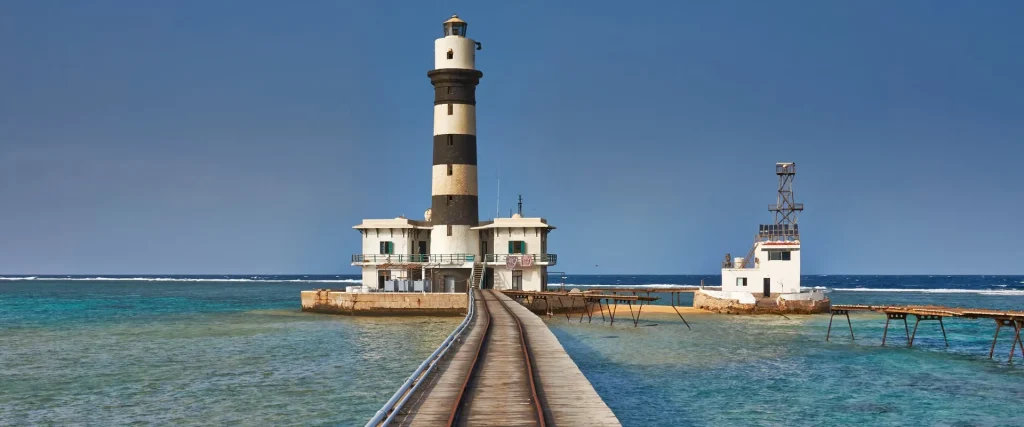
Daedalus is an oval reef rising from 500m depths, 52 nautical miles east of Marsa Alam. There’s a manned lighthouse on it, no mooring infrastructure for day trips, and almost no boat traffic. You either get here on a liveaboard or you don’t get here at all. Three days on the reef means nine dives out of 19 total — enough to work all four sides, hit the north tip at different times of day and find your own rhythm with the site.
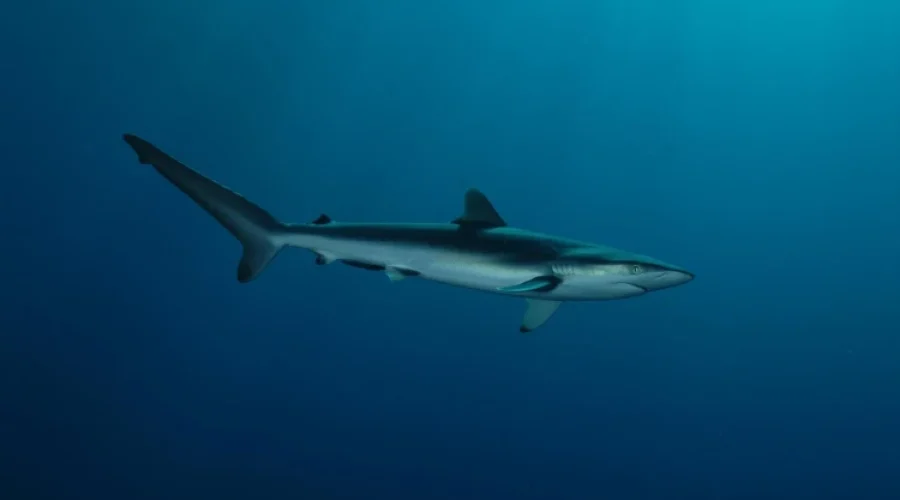
The hammerheads are the headline — the north current that funnels around the tip brings them through most reliably from May to November, but the reef has year-round shark activity including grey reef, oceanic whitetip and silvertip. The walls themselves are in extraordinary condition: hard coral formations that haven’t been damaged by anchors, massive gorgonian fans and schools of barracuda and tuna that live permanently on the reef.
The route also covers Elphinstone — for check dives on Day 2, which is genuinely convenient since Elphinstone is one of the best reefs in Egypt — and Sataya Reef on Day 6, where a large pod of spinner dolphins lives in the lagoon year-round.
🦈 Daedalus Reef — 9 dives across 3 days. North tip hammerheads, all four walls, year-round shark activity.
🦈 Elphinstone — check dives on Day 2 and final dives Day 7. Oceanic whitetips on the south plateau year-round.
🐬 Sataya Dolphin House — Day 6. Resident spinner dolphin pod, most dives produce encounters.
🐟 Abu Dabbab — check dives Day 2. Turtles, rays, calm water before the offshore crossing.
🌙 Night dives — coral heads at anchor near Daedalus, Sataya lagoon at night.
Diver Requirements
Advanced Open Water Diver with 30+ logged dives minimum. Daedalus is all drift dives — strong, sometimes unpredictable currents on all sides. Down-currents are possible on the north and south tips. Your guide briefs every dive carefully. Certifications, logbook and dive insurance checked before departure on Day 2.
What's Included
✓ Free Nitrox 32% — all fills
✓ 12-litre tanks, weights & belts
✓ Dive guide on every dive
✓ Full-board halal open buffet
✓ Soft drinks & fresh juices
✓ Airport transfers from Marsa Alam (RMF)
○ Marine park fees not included
○ Equipment rental on request
🚫 No night dives at Daedalus Reef (HEPCA marine park regulations). Night dives on this route are at anchor near Daedalus (small coral heads outside the park zone) and at Sataya lagoon on Day 6.
DIVE SITES
Daedalus · Elphinstone · Sataya · Abu Dabbab
Four outstanding dive sites in the southern Red Sea — connected by overnight crossings aboard M/Y Aphrodite from Port Ghalib.
Abu Dabbab
Near Port Ghalib · Day 2, Dives 1 & 2 — check dives
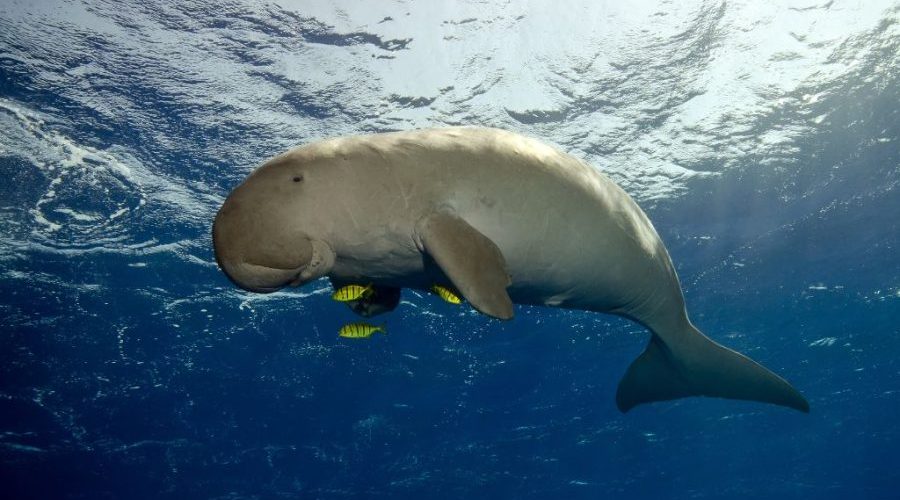
A sheltered bay with seagrass beds and coral gardens close to Port Ghalib — calm water, excellent visibility and rich shallow life. Sea turtles feed on the seagrass almost every dive. Blue-spotted rays and garden eels in the sandy sections, moray eels in the coral. Used here as check dives before the overnight crossing to Daedalus.
Daedalus Reef — North Tip
Marine Reserve · 52nm east of Marsa Alam · Days 3–5
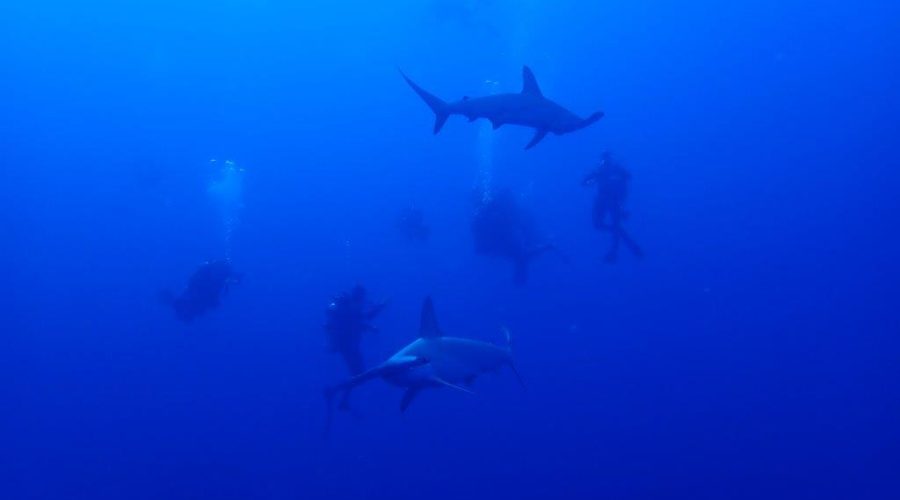
The north tip is where the current converges and the hammerheads come through. Strong flow from both sides meets here — divers drop in up-current and drift across the tip with the reef wall on one side and open blue on the other. Hammerheads work this current year-round; May to November is when schools form.
Daedalus Reef — East & West Walls
Marine Reserve · Days 3–5
The east and west walls of Daedalus are pristine hard coral formations — mountainous heads and valleys that see almost no damage. The east wall gets morning light; the west wall is best in the afternoon. Gorgonian fans at 20–35m, barracuda and trevally schools, large groupers and Napoleon wrasse working the coral.
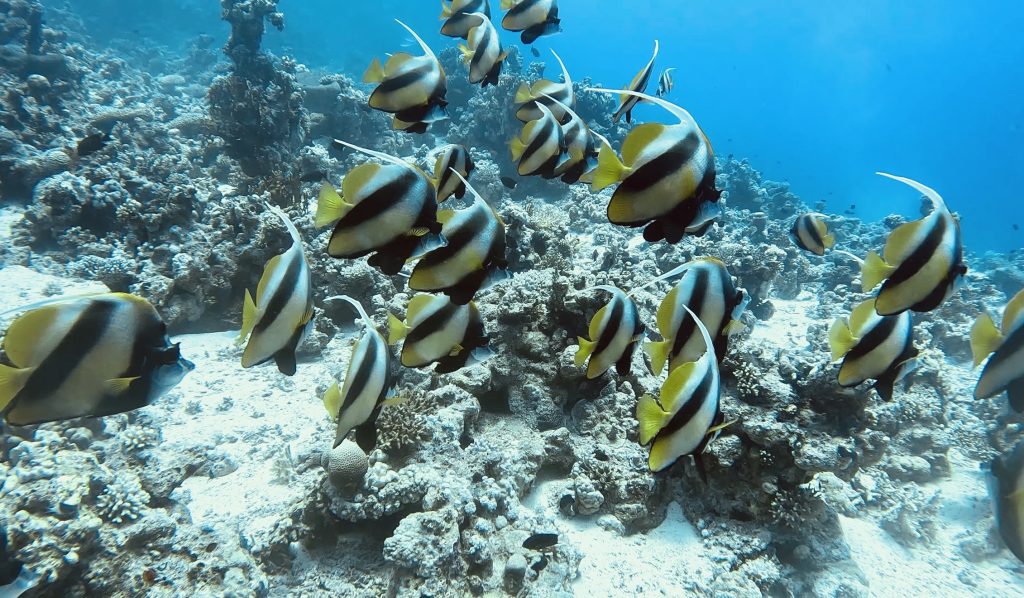
Daedalus — Anchor Reef (Night Dives)
Outside marine park zone · Days 3 & 4 nights
The boat anchors in a sheltered position outside the Daedalus marine park boundary. The coral heads and sandy patches here are a completely different experience — calm, shallow, and full of nocturnal life. Octopus hunting in the open, sleeping parrotfish, lionfish, nudibranchs and decorator crabs.
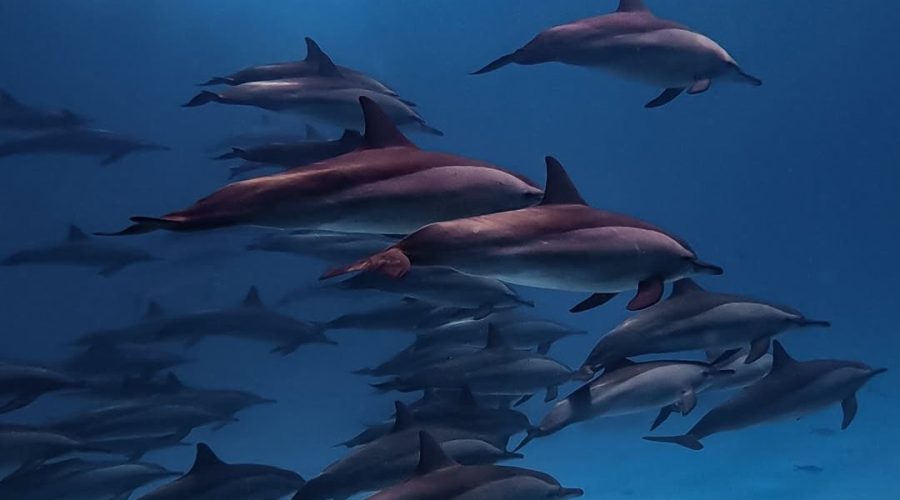
Sataya Reef — Dolphin House
Near Hamata · Day 6 · 3 dives + night
A large oval reef with a lagoon where a resident pod of spinner dolphins lives and socialises year-round. Most dives produce dolphin encounters — they come to divers out of curiosity. The outer reef has excellent coral gardens, turtles and rays. Night dive in the lagoon with the full nocturnal cast.
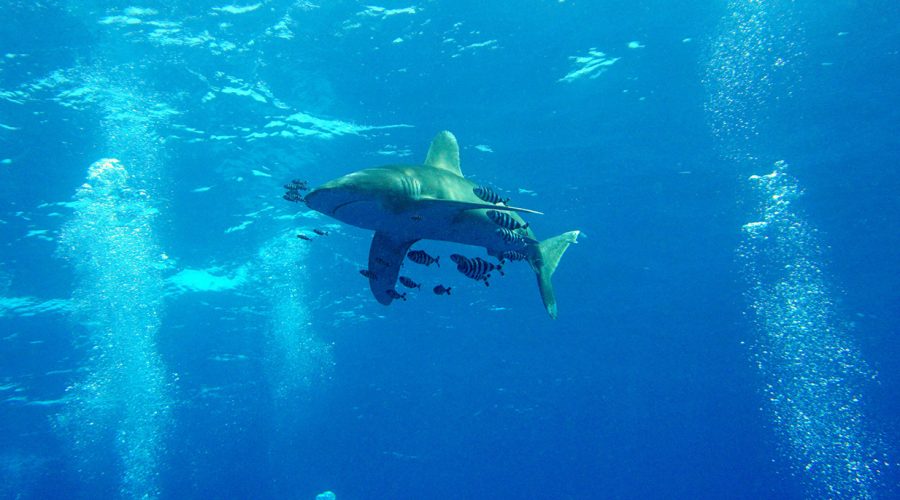
Elphinstone Reef
30km south of Port Ghalib · Day 2 check + Day 7 final dives
Dived twice on this route — once as a check dive on Day 2, and again as the final two dives on Day 7. The south plateau and arch is where the oceanic whitetip sharks (Longimanus) live year-round. North plateau gets hammerheads in season. Soft coral walls in purple and red on both sides.
ITINERARY
Day by Day
Subject to weather, coast guard permits and captain’s discretion. Daedalus diving is subject to marine park access and sea conditions. Days 3–5 highlighted in blue.
Embarkation
PORT GHALIB MARINA · FROM 17:00
Board M/Y Aphrodite from 17:00. First meal on board is dinner. Cabin allocation, safety briefing and dive equipment set-up. Certifications, logbooks and dive insurance checked here — have them ready. Overnight in port.
Abu Dabbab Check Dives · Overnight Crossing to Daedalus
ABU DABBAB · THEN OVERNIGHT SAIL TO DAEDALUS (~8 HOURS)
Two check dives at Abu Dabbab — sheltered bay, calm water, sea turtles on the seagrass. The guide uses these to assess buoyancy and trim before the open-ocean reef. After lunch the boat heads east — Daedalus is 52 nautical miles offshore, about 8 hours of sailing. Arrive at Daedalus during the night and moor up.
Daedalus Reef — Day 1 of 3
DAEDALUS REEF MARINE RESERVE · 52nm OFFSHORE
Arrive at Daedalus in the morning. First real look at the reef — typically the north tip for the first dive when the current is running and the hammerheads are most active, then east and west walls. Three drift dives across the day. Night dive on the coral heads at anchor outside the park zone.
Daedalus Reef — Day 2 of 3
DAEDALUS REEF
Second full day on the reef. By now you know the mooring, the entry points and the current patterns. North tip at dawn is often the best window for hammerheads. Afternoon dives on the south section and lighthouse area. Second night dive on the anchor reef.
Daedalus Reef — Day 3 of 3 · Sail Back
DAEDALUS REEF · THEN SAIL TOWARD COAST
Three final dives at Daedalus — last chance to revisit the sites you want to see again. After the third dive, late afternoon, the boat begins the crossing back toward the coast. Dinner under way. The isolation of Daedalus hits you properly on the sail back.
Sataya Reef — Dolphin House
SATAYA REEF · NEAR HAMATA
Three dives at Sataya Reef — home of a resident spinner dolphin pod. The first dive in the lagoon is usually the best for dolphin encounters. Second dive on the outer reef: coral gardens, turtles, rays. Third dive back in the lagoon. Night dive at Sataya with the full nocturnal cast.
Elphinstone — Final Two Dives
ELPHINSTONE REEF · 30KM SOUTH OF PORT GHALIB
Two final dives at Elphinstone on the way back to Port Ghalib. South plateau for Longimanus — early morning gives the best chance before the day boats arrive. North plateau or east wall for the second dive. Then the short sail back to Port Ghalib marina. Last night on board.
Disembarkation
PORT GHALIB MARINA · AFTER BREAKFAST
Last meal on board is breakfast. Check out of cabin by 10:00, leave the boat by 12:00. Transfers to Marsa Alam Airport (RMF) or Hurghada Airport (HRG) arranged on request.
MARINE LIFE
What Lives at Daedalus
The isolation that makes Daedalus hard to reach is the same thing that keeps the marine life here exceptional. Three days gives you three days of chances.
North tip · May–Nov peak, year-round
All walls · consistent every day
Open water + Elphinstone south
Daedalus walls · less common
Sataya lagoon · year-round, Day 6
Abu Dabbab & Sataya
Daedalus walls · permanent schools
Daedalus & Elphinstone · seasonal
BOOK YOUR RED SEA LIVEABOARD
Book Daedalus Reef from Port Ghalib
Nine dives at Egypt’s most remote reef. Hammerheads, pristine walls, Elphinstone whitetips and Sataya dolphins — all from Port Ghalib on M/Y Aphrodite.